

How to Finance a New Construction Home in Des Moines and What Iowa Buyers Need to Know Before They Apply
Most people who call us have already spent weeks looking at floor plans and comparing communities. Then we start talking about financing and suddenly the whole process feels more complicated than they expected.
That is normal. New construction financing is genuinely different from buying an existing home. The loan types are different, the timeline is different, the rate lock question is different, and there are Iowa-specific programs that can change your monthly payment significantly that most buyers never hear about until they happen to ask the right lender.
This post covers all of it. If you are seriously thinking about building in the Des Moines metro, read this before you talk to a lender. It will make that conversation much more productive.
The short answer on financing a new construction home in Iowa
New construction financing in Iowa typically works one of two ways: a construction-to-permanent loan (sometimes called a one-time close) where the loan converts from a construction loan to a mortgage when the home is done, or a standard mortgage that closes after construction is complete. Iowa Finance Authority programs can apply to both paths and are available for new construction in the Des Moines metro. If you qualify for IFA, the cost difference over the life of your loan can be substantial.
Why new construction financing is different from buying an existing home
When you buy an existing home, you apply for a mortgage, get approved, and close on a specific house that already exists. The whole process usually takes 30 to 45 days from offer acceptance to close.
New construction does not work that way. You are committing to a home that does not exist yet. The lender cannot underwrite a finished property because there is no finished property. That introduces a few complications the standard mortgage process does not have:
The home’s value at completion is not guaranteed. A lender providing construction financing is betting that the completed home will appraise at or above the contract price. In most markets, this is not a major obstacle, but it is a step that does not exist in resale lending.
The timeline between contract and closing is months, not weeks. For a new build in the Des Moines area, you are looking at roughly six to nine months from contract to close. A lot can change in that window, including interest rates.
You may have two separate financial phases. Depending on the loan structure you choose, you may need to manage a construction loan during the build phase and then convert to or separately obtain a mortgage at closing. This is where buyers get confused most often.
The two main financing structures for new construction
Construction-to-permanent loans (one-time close)

This is the most common structure for buyers building with a local semi-custom builder like Gladiator Homes. You apply for one loan before construction begins. During the build, you typically pay interest only on the amount that has been drawn from the loan. When construction is complete and the home is ready to close, the loan automatically converts to a standard mortgage with your regular principal and interest payments.
The advantages are significant. You only go through underwriting once, which means only one set of closing costs. You lock your loan terms early in the process. If rates rise during your build, you are protected.
The trade-off is that lenders offering construction-to-permanent products sometimes have slightly higher rates than conventional 30-year mortgages at the time of conversion. Whether that difference matters depends on how rates move during your build and how long you plan to stay in the home.
Standard mortgage at close
Some buyers choose to wait and apply for a traditional mortgage after the home is complete and ready for occupancy. The advantage here is that you are shopping for a mortgage in a competitive market when you know exactly what you need. You may find a better rate than what was available when construction started.
The risk is that rates may also be higher when construction ends than when you signed your contract. If rates rise significantly during a seven-month build, you bear that risk fully. For buyers who can absorb that uncertainty or who believe rates are likely to fall, this approach works. For buyers who need to know their payment with certainty before committing to a build, the construction-to-permanent loan removes the guesswork.
Iowa Finance Authority programs and why they matter for new construction buyers
The Iowa Finance Authority (IFA) administers two main homeownership programs that apply to new construction in the Des Moines metro. These programs are not widely advertised, and many buyers build here without ever knowing they were eligible. The difference in lifetime loan cost can be significant.
The First Home Program
This is Iowa’s primary first-time homebuyer program. “First-time” in Iowa’s definition means you have not owned a principal residence in the past three years, which means buyers who previously owned a home but have been renting for three or more years may still qualify.
The program provides below-market interest rates on 30-year fixed-rate mortgages. The rate advantage varies by market conditions but has historically been 0.25% to 0.75% below conventional rates. On a $300,000 loan, a 0.5% rate reduction saves approximately $85 per month and more than $30,000 over the full loan term.
Income limits for Polk County (2026): Household income limits for the FirstHome Program in Polk County are currently set at $131,200 for a 1-2 person household and $153,067 for a 3+ person household. These limits are adjusted periodically, so verify current figures at the IFA website.
Purchase price limits: New construction homes in Polk County must come in under the IFA purchase price ceiling, which for 2026 stands at $481,176 in most areas of the Des Moines metro. Most Gladiator Homes floor plans fall comfortably within this limit.
How it works with new construction: IFA loans fund at closing, which means they work with both the construction-to-permanent structure and the standard mortgage-at-close approach. You apply through an IFA-approved lender. Working with a lender who has experience closing IFA loans on new construction matters, the process has a few extra steps that lenders without IFA experience can mishandle.
The Homes for Iowans Program
This program is for buyers who do not meet the first-time buyer definition for FirstHome. It offers slightly less aggressive rate benefits but still provides below-market financing for buyers at moderate income levels. The income and purchase price limits are the same as FirstHome. If you have owned a home in the last three years but still fall within the income limits, this is the program to ask your lender about.
The Military Homeownership Assistance Program
Iowa also administers a grant-based down payment assistance program specifically for active duty service members, veterans, and surviving spouses. The program provides a $5,000 grant, which does not need to be repaid, and can be layered with either the FirstHome or Homes for Iowans loan. For eligible buyers, this is effectively free money toward your down payment that does not affect your loan terms.
For complete and current program details on all IFA programs, visit opportunityiowa.gov.
Down payment requirements for new construction in Des Moines
Your final walk-through happens with the superintendent and sales manager. Any punch list items are noted and resolved. Once cleared, you close on the home and receive your keys. For buyers who started the process in September or October 2026, this puts you in your new home just before or right at the start of the 2027-2028 school year.
Conventional loans: Typically require 3% to 5% down for first-time buyers and 5% to 20% for repeat buyers, depending on lender requirements and whether you want to avoid private mortgage insurance.
FHA loans: 3.5% down with a minimum 580 credit score. FHA loans work for new construction, though they require the home to meet specific property condition standards, which new builds almost always satisfy.
VA loans: Zero down payment for eligible veterans and active duty service members. VA loans work for new construction with a builder who participates in the VA appraisal process.
USDA loans: Zero down payment for buyers purchasing in eligible rural and suburban areas. Parts of the Des Moines metro, particularly some areas around Norwalk and smaller surrounding communities, may qualify. Use the USDA eligibility map to check a specific address.
IFA programs: Can be combined with down payments as low as 3% on conventional loans.
What you will typically need at contract signing is an earnest money deposit, not a full down payment. With Gladiator Homes, the deposit paid at contract goes toward your down payment at closing. The full down payment is not due until you close on the finished home.
Property tax abatements and why Norwalk is worth a serious look right now
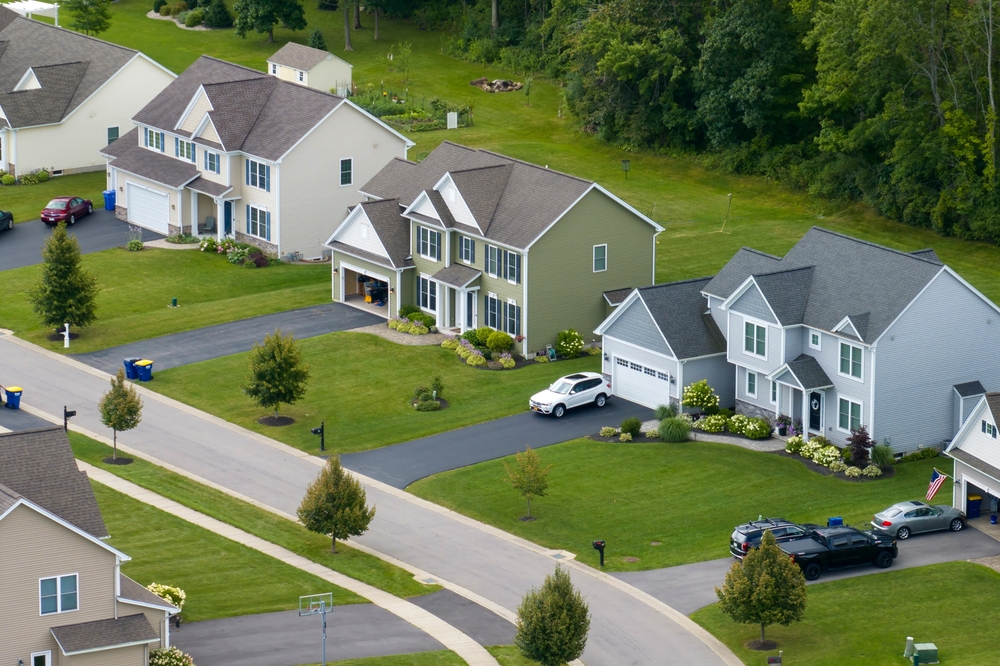
One angle most buyers overlook is property tax abatements on new construction. Iowa law allows municipalities to grant multi-year partial abatements on the assessed value of new residential construction. This reduces your property tax bill significantly in the early years of homeownership.
Norwalk currently offers a five-year partial property tax abatement on new construction. In practical terms, this can mean paying property taxes on land value only (or a fraction of total assessed value) for the first five years, which meaningfully lowers your true monthly carrying cost compared to what the full assessed tax bill would be.
Combined with Norwalk’s generally lower land and home prices compared to Ankeny and Waukee, new construction in Norwalk often produces a lower total monthly payment than buyers initially expect. Our guide to building in Norwalk covers the full financial picture for that community.
Builder financing versus your own lender
Most builders, including Gladiator Homes, have preferred lenders they work with regularly. Builders sometimes offer incentives for using their preferred lender, closing cost credits, interest rate buydowns, or upgrades at the same price. These offers can be genuine value, or they can be a way to push buyers toward lenders who may not offer the best rates.
The right approach is to get a quote from the builder’s preferred lender and a quote from at least one outside lender at the same time. Compare the full loan cost, not just the rate — compare the rate, points, origination fees, and any incentives as a package. If the preferred lender’s total offer is better after accounting for incentives, use them. If an outside lender comes in materially better despite the lost incentives, go with the outside lender.
The one place where using the builder’s preferred lender consistently adds value is in the construction-to-permanent loan. Preferred lenders tend to have established processes for tracking draws, handling inspections, and managing the conversion at close on that specific builder’s homes. If you go with an outside lender who has not closed construction loans with that builder before, expect more friction during the build.
The 2024 IRC raises requirements for insulation R-values, air sealing, fenestration (windows and doors), and HVAC efficiency. A home built to this standard uses meaningfully less energy than a home built to the previous code cycle, and significantly less than a home built 20 years ago. For buyers thinking about long-term monthly costs, this is not an incidental detail. Iowa winters are real, and a tighter, better-insulated home is a lower heating bill from November through March for as long as you own it.
When to get pre-approved, and what pre-approval means for a new build
For a new construction home, get pre-approved before you start seriously looking at floor plans. Not pre-qualified, pre-approved. Pre-qualification is a lender’s estimate based on information you provide verbally. Pre-approval involves the lender actually pulling your credit, reviewing your income documentation, and issuing a letter stating what you are approved to borrow.
The reason to do this early is that the floor plan you fall in love with, and the community you choose, should both be within your confirmed budget. Falling in love with a $375,000 home and then discovering your pre-approval caps at $310,000 is a frustrating position to be in. Getting pre-approved first means you are looking at the right homes from the start.
For buyers using IFA programs, the pre-approval process has one extra step: you need to apply through an IFA-approved lender specifically. Not all lenders participate in IFA programs. Our team can point you toward lenders in the Des Moines market with strong experience in IFA new construction financing.
The rate lock question
This is one of the most common and most anxiety-inducing questions in new construction financing right now. If your home will not be done for seven months, when do you lock your rate?
The honest answer is that nobody knows with certainty where rates will be seven months from now. What you can control is the structure of your lock and the cost of locking early.
Most construction-to-permanent lenders offer extended rate locks of 6 to 12 months at the time you begin the construction loan. These extended locks often carry a cost — either a higher rate or an upfront fee. Whether that cost is worth it depends on your view of rates and your personal risk tolerance.
Float-down provisions allow you to capture a lower rate if rates fall during your lock period, subject to certain conditions. If you are locking for an extended period, ask about float-down options specifically.
Waiting to lock at the mortgage application stage (after construction is complete, for buyers using the standard mortgage approach) gives you maximum flexibility but maximum rate exposure.
Most buyers building in the Des Moines metro right now are choosing some form of extended lock or construction-to-permanent structure, because rate uncertainty is real and monthly payment certainty matters for family budgeting. Your lender should walk you through the exact cost and terms of any lock option they offer.
What happens between signing and closing on a new build
Understanding the financial timeline helps you plan. Here is how it typically flows for a new construction home with Gladiator Homes:
At contract signing: Earnest money deposit is paid. You begin your financing application if you have not already.
During construction: If you have a construction-to-permanent loan, the lender makes draws to the builder at construction milestones. You may make interest-only payments on the drawn amount. If you are doing a standard mortgage, you are not yet in the active loan phase, you are just waiting.
At substantial completion: The home is inspected for the certificate of occupancy. At this point, construction-to-permanent loans convert and begin their standard amortization. Standard mortgage buyers apply for and process their loan, targeting a close date aligned with the certificate of occupancy.
At closing: You pay your down payment and closing costs, sign your loan documents, and receive your keys.
The full timeline from contract to close on a ground-up build in Des Moines right now is typically six to nine months. If you want to understand what a start-date-specific timeline looks like, our fall build timeline post walks through exactly how a fall 2026 start maps to a 2027 closing.
What affects your approval and rate on a new build
The same factors that affect any mortgage apply here: credit score, debt-to-income ratio, income stability, and down payment size. A few specifics for new construction:
Credit score: 620 is typically the minimum for conventional financing. 740 and above puts you in the range for the best conventional rates. FHA allows down to 580 with 3.5% down.
Employment history: Lenders want to see two years of stable employment. Self-employed buyers typically need two years of tax returns showing consistent income.
Large deposits and gifts: Any large deposit in your bank accounts during the application period may need to be documented. If family is helping with your down payment, tell your lender early, there is a specific process for documenting gift funds.
First-time buyer resources specific to Iowa and Des Moines
If this is your first home purchase, the combination of IFA programs, a new construction home with no deferred maintenance, and a builder warranty produces a genuinely different financial picture than buying resale. Our post on what every first-time home buyer in Iowa should know before building new goes deeper on the buyer education side.

For the financing question specifically, the three resources worth bookmarking are:
Iowa Finance Authority homeownership programs — current income limits, purchase price limits, participating lenders, and program details for FirstHome, Homes for Iowans, and the Military Assistance Program.
USDA eligibility map — for checking whether a specific Des Moines metro address qualifies for zero-down USDA financing.
Iowa HUD-approved housing counselors — free or low-cost counseling for buyers who want independent guidance on the financing process before they commit.
See what your new home would cost before you talk to anyone
Our Interactive Home Designer lets you choose a floor plan, select your finishes, and see a real price before you have a single conversation with our sales team or a lender. That number is what you bring to your lender for pre-approval, not a ballpark, an actual configured price.
From there you can browse our available homes in Ankeny, Waukee, and Norwalk, walk through a finished home at one of our open houses, or contact our team to talk through which community and floor plan fits your budget and timeline.
We are at 2575 N Ankeny Blvd, Suite 211, Ankeny, IA 50023, and by phone at (515) 963-0842.
When you are ready to talk about lots, availability, and timeline specifics for your situation, we are at 2575 N Ankeny Blvd, Suite 211, Ankeny, IA 50023 or by phone at (515) 963-0842. We hold open houses across all three communities regularly, and walking through a finished home gives you a clearer picture of what you are building than any floor plan on a screen.
The buyers who will be in their new Des Moines metro homes before school starts in August 2027 are the ones who start this fall, not next spring.
Browse available homes in Central Iowa Explore floor plans Design and price your home Talk to our team
Your Affordable & Quality Home Builder in the Des Moines, Iowa Metro Area. In today’s market, “affordable” often equates to cutting corners, especially when it comes to home-building. But at Gladiator Homes, we challenge this notion. We believe in crafting affordable homes that are both accessible and unparalleled in quality. As top-rated affordable home builders, we focus on smaller-sized homes, achieving a perfect balance: spaces that are cozy yet not constrained, resonating with thoughtful design and top-tier building materials. So, whether you’re starting your home journey or downsizing, with Gladiator Homes, you don’t have to compromise. Experience a home where affordability meets impeccable craftsmanship.