

Most buyers come into this decision already leaning one way or the other. Some assume resale is the sensible, straightforward choice. Others assume new construction is the smarter long-term move. Very few people have actually run the numbers on both for this specific market, in this specific year.
This post does that. It is written for buyers in the Des Moines metro who are actively weighing both options and want a straight answer, not a pitch.
We build new homes. We will tell you when resale makes more sense.
Before comparing new and resale, you need to understand the market you are shopping in.
As of Q2 2026, the Des Moines metro has 2,144 active resale listings, up from 1,530 in early 2024. That means buyers have more resale options today than they have had in several years. At the same time, active new construction inventory has dropped to 734 homes across the metro, down from roughly 900 three years ago. Resale is becoming easier to find. New construction is becoming harder to find.
Pending sales through July 2026 are running at 1,375 per month, up from 1,316 the year before, and rolling 12-month sales have hit 8,513 homes, the strongest pace in four years. This is not a soft market. Demand is real and consistent, which matters when you are thinking about what either type of home will be worth when you eventually sell.
One data point that surprises most buyers: the average resale home price in the Des Moines metro has risen approximately 70% since 2016, from around $198,000 to roughly $338,000 today. New construction prices over the same period rose about 35%, from $338,000 to roughly $457,000, a rate of about 3.4% annually.
Read that again. Resale prices rose nearly twice as fast as new construction prices over the past decade. The idea that new construction is always the more expensive option is not accurate when you look at the full picture.
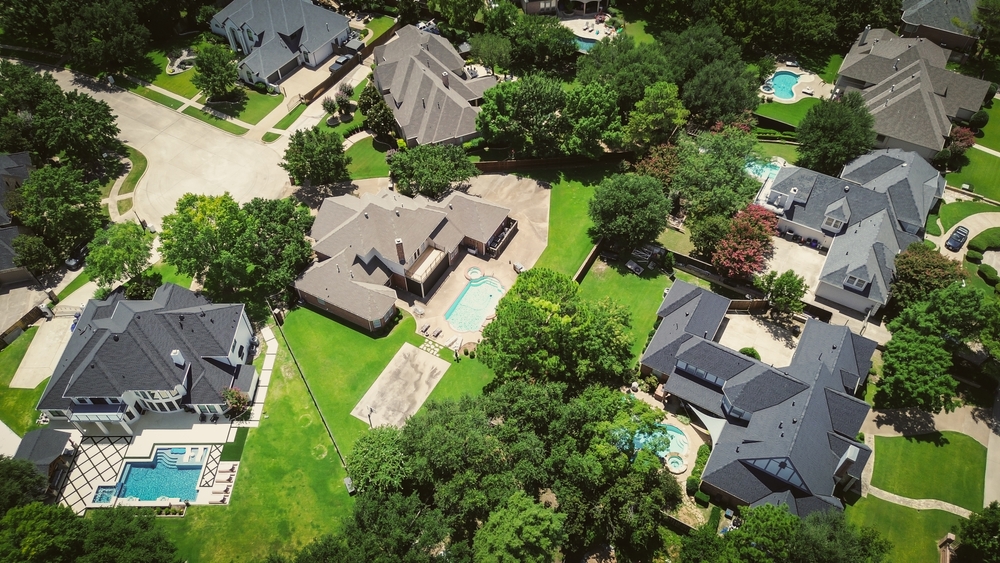
A new home is not just a house that smells like fresh paint. It is a different product from a resale home in ways that matter over the first five to ten years of ownership.
Everything is new. The roof, the HVAC system, the water heater, the appliances, the electrical panel, the plumbing. None of these things have aged. None of them carry the unknown history of previous owners or deferred repairs. When you close on a new construction home, you are not inheriting anyone else’s decisions about what to fix and what to ignore.
It is built to 2026 Iowa energy codes. A home built to 2026 Iowa energy codes is a different product from a home built in 1985. Better insulation, efficient HVAC, modern plumbing and electrical, windows that actually seal. That translates directly to monthly utility costs. Homeowners with older, less-insulated homes will see bills trend toward the higher end, while newer construction with improved efficiency ratings typically lands at the lower end. In Iowa, where heating costs run high from November through March, that difference compounds over time.
You get a warranty. Gladiator Homes backs every home with structural, mechanical, and materials warranty coverage. That means if something goes wrong in the early years, you have a direct path to resolution. With resale, every repair after closing is your expense. No builder standing behind the work.
You choose the finishes. Before you move in, you decide on flooring, cabinet colors, countertop material, fixture finishes, and exterior selections. In a resale home, you inherit someone else’s choices. Updating those choices after purchase costs real money, and some things, like a layout that does not work for your family, cannot be changed at any price.
The floor plan reflects how people actually live in 2026. Open sight lines from the kitchen to the living area, connected storage, practical room flow. Resale homes from 20 or 30 years ago were designed around how families lived then. A formal dining room that nobody uses, hallways that eat up square footage, a kitchen that faces away from the backyard where the kids are playing. These are not small things once you are living with them every day.
You can explore Gladiator Homes’ current floor plans and see what is available across our Ankeny, Waukee, and Norwalk communities. If you want to price out a specific plan with your selections before making any commitment, the Interactive Home Designer does exactly that.
Being fair about resale is important here, because it is the right choice for some buyers.
You can move faster. A resale purchase in Iowa typically closes in 30 to 60 days. New construction that is already framed or near completion can get close to that, but if you are starting from a new lot, you are looking at six to nine months minimum. If your lease ends in October, your employer is relocating you, or you need to be in a home for the start of the school year and it is already August, resale may be the only realistic path.
You get established landscaping.The trees are tall. The hedges are full. The garden has settled into itself. New construction lots take time to mature. Buyers who care deeply about established landscaping should weigh that seriously. A new home can be planted beautifully, but it cannot instantly create decades-old trees. If the outdoor space matters as much to you as the interior, this is a genuine difference.
The neighborhoods are established. Resale in places like Beaverdale, Sherman Hill, or Windsor Heights puts you in a neighborhood with history, walkability, and neighbors who have lived there for years. New construction communities are still forming their identity. Neither is better in an absolute sense, but they feel different to live in.
There may be more room to negotiate. Builders are often less flexible on base price and more willing to offer upgrade credits, closing cost assistance, or rate buydowns instead of a straight price reduction.With a resale home, price negotiation is more direct. In a market with rising resale inventory like 2026, buyers in the resale market have more leverage than they have had in several years.

This is where the sticker price comparison most commonly breaks down.
A resale home listed at $285,000 is not the same financial commitment as a new construction home at $310,000. The question is what happens in years two through seven.
The roof on a 1998 home in the Des Moines metro is 28 years old. A full replacement runs $12,000 to $20,000. The HVAC system on a 2005 home is approaching the end of its typical 15 to 20 year lifespan. Replacement cost is $7,000 to $14,000. Water heaters last 10 to 15 years. Electrical panels in homes from the 1970s and 1980s can require full upgrades at $4,000 to $8,000 before they are insurable.
None of this makes resale a bad choice. But it does mean the $25,000 price gap between a new home and a resale home can disappear in the first few years of ownership if the older home needs major system work.
Before you make an offer on a resale home, have a licensed home inspector walk through it specifically looking at roof age and condition, HVAC age and service history, water heater, electrical panel, and foundation. Get repair estimates on anything flagged. Then add those to your comparison.
A new home does not have this problem at closing. New construction homes typically offer lower maintenance costs in the first 5 to 10 years because major systems and materials are new. That is not a marketing claim. It is a straightforward function of age.
Here is how the timeline actually breaks down in the Des Moines metro in 2026.
Resale: Offer accepted to close typically runs 30 to 45 days with conventional financing. Add time for inspection, negotiation, and any repair requests, and 45 to 60 days is a reasonable estimate.

New construction, move-in ready: Gladiator Homes has homes already under construction or near completion listed on our available homes page. These can close in 30 to 60 days, which is competitive with resale.
New construction, from a new lot: Six to nine months from signed contract to keys under normal conditions. This includes the pre-construction period for permits and selections and the active build period. If you need to be in a home in 90 days or less, this path is not going to work.
The honest guidance: if your move-in timeline is flexible and you have six months or more, new construction gives you the full range of options. If you need to be somewhere by November, look at our available homes first, and then resale as a backup.
New construction financing works slightly differently from resale, and it is worth understanding before you are surprised mid-process.
Most new construction purchases in Iowa are financed with a standard purchase loan, not a construction loan, as long as the home is already under construction or complete. FHA, VA, and conventional loans all work for new construction, and Iowa Finance Authority programs including the FirstHome Program and the Homes for Iowans program apply to new construction purchases just as they do to resale.
The IFA FirstHome Program offers down payment requirements as low as 3% with interest rates that do not change based on your credit score, for buyers who have not owned their primary residence in the last three years, with a household income limit that varies by county from $102,100 to $171,360 and a purchase price limit of $566,000.
Our blog post on first-time home buyer programs in Iowa covers this in detail if you want to understand the full program before talking to a lender.
One advantage builders sometimes offer that resale sellers rarely can: rate buydowns and closing cost contributions. In a market where inventory is sitting a bit longer, builders have more incentive to help buyers get across the finish line. It is worth asking about directly.
New construction is likely the better fit if any of these apply to you.
You want to move into a home where nothing needs to be touched or updated in the first few years. You want a warranty backing the work. You have a child starting school and want to be in a specific district’s new construction community. You care about choosing your finishes rather than repainting someone else’s choices. You plan to stay in the home for at least five to seven years, giving the new construction price point time to be justified by low maintenance costs and value appreciation. You want a floor plan designed for how families actually live today.
Our floor plan guide is a good starting point if you are not sure which layout fits your household.
Resale is likely the better fit if any of these apply to you.
You need to be in a home within 60 to 90 days. You specifically want to live in an established neighborhood with mature trees and years of community history. You are buying in a price range or location where new construction is not available. You are comfortable with the possibility of near-term repair costs and have budgeted for them. The neighborhood itself, its character, its walkability, its specific streets, matters more to you than the home’s age.

Rather than trying to make a final call in the abstract, here is a more useful approach.
Find two or three resale homes in your target area that match your size and budget. Get estimates from a licensed inspector on anything that will need work in the next five years. Add those estimates to the purchase price.
Then look at what new construction in the same area and budget would cost, including finishes, using our Interactive Home Designer. The tool gives you a real price based on your actual selections so you are comparing honest numbers.
Then compare the total five-year cost of each path, not just the purchase price. Include your estimate of near-term repairs on the resale side, and the near-zero maintenance expectation on the new construction side. That comparison will tell you more than any general rule about which type is better.
If you want to walk through finished Gladiator Homes in person before making that comparison, our open houses across Ankeny, Waukee, and Norwalk give you that opportunity without any pressure.
We build in Ankeny, Waukee, and Norwalk, three of the strongest growth communities in the Des Moines metro. Each one has a different character, price point, and school district, so the right choice depends on what matters most to your household.
Our available homes page shows real-time inventory with photos and prices. If something there fits your timeline and budget, it is worth a conversation. If nothing there is the right fit, our floor plans show what is possible on a lot that suits you.
We are at 2575 N Ankeny Blvd, Suite 211, Ankeny, IA 50023. Phone is (515) 963-0842. Our team is happy to walk through both paths with you honestly, including telling you when resale is likely the better call for your specific situation.
See available new homes in Central Iowa Design and price your home online Browse floor plans Talk to our sales team

Your Affordable & Quality Home Builder in the Des Moines, Iowa Metro Area. In today’s market, “affordable” often equates to cutting corners, especially when it comes to home-building. But at Gladiator Homes, we challenge this notion. We believe in crafting affordable homes that are both accessible and unparalleled in quality. As top-rated affordable home builders, we focus on smaller-sized homes, achieving a perfect balance: spaces that are cozy yet not constrained, resonating with thoughtful design and top-tier building materials. So, whether you’re starting your home journey or downsizing, with Gladiator Homes, you don’t have to compromise. Experience a home where affordability meets impeccable craftsmanship.
to save your favourite homes and more
Enter your email address and we will send you a link to change your password.